If you've noticed flakes on your shoulders and more hair in the shower drain, you are not alone. One of the most common questions we hear is whether dandruff can actually cause hair fall. The short answer is yes, but only indirectly. Dandruff does not make hair fall out by itself; instead, it creates scalp conditions that can push follicles into a weaker state. Understanding this link is the first step toward treating both problems at the source.
What is really happening when dandruff meets hair fall?
Dandruff is usually caused by an overgrowth of Malassezia, a yeast-like fungus that lives naturally on everyone's scalp. When it multiplies faster than usual, it feeds on scalp oils and produces by-products that irritate the skin. Your immune system responds with low-grade inflammation. Over time, that inflammation can affect the area around the hair follicle, making it harder for the follicle to hold onto the hair strand.
This is where the dandruff and hair fall connection comes in. Inflamed follicles can shift into a resting phase sooner than they should. Hair that enters the resting phase detaches more easily during washing, combing, or even while you sleep. The result is increased daily shedding that looks like hair loss, even though the root cause is scalp irritation rather than genetic balding.
How does Malassezia trigger this chain reaction?
Malassezia is not an infection you catch from somewhere. It is a normal part of the scalp microbiome. Problems start when the balance tips. Oily scalps, humidity, sweat, and product buildup create an environment where Malassezia thrives. As it grows, it breaks down sebum into compounds that can irritate sensitive skin.
- Itching and redness signal that the scalp barrier is irritated.
- Scratching the itch can physically damage follicles and break hair shafts.
- Inflammation changes the local environment around the follicle.
- The hair growth cycle can shorten, leading to more shedding.
Research using scalp biopsies has shown that areas with active dandruff often have higher levels of inflammatory markers. Those markers do not destroy follicles overnight, but they can keep follicles in a stressed state. This is why people with chronic dandruff sometimes notice diffuse thinning alongside the flaking.
Is the hair fall caused by dandruff permanent?
In most cases, no. If the follicle is still alive and the inflammation is controlled, hair usually returns to its normal cycle. The key is to remove the trigger and give the scalp a stable environment. This is different from pattern hair loss, which is driven by hormones and genetics. Dandruff-related shedding is more like a reversible signal that your scalp needs care.
That said, chronic inflammation over many years is not ideal. If dandruff is left untreated and the scalp is scratched repeatedly, some follicles can become scarred or miniaturized. Catching the issue early and treating it consistently gives the best chance of full recovery.
What is the best way to treat dandruff-related hair fall?
A two-step approach works best. First, remove the Malassezia trigger. Second, calm the follicle so the growth cycle can reset. Anti-dandruff ingredients like Salicylic Acid help lift flakes, Piroctone Olamine reduces the fungus, and Tea Tree Oil provides calming support. Once the scalp is cleaner, growth-focused actives like Redensyl and Anagain can help anchor new growth.
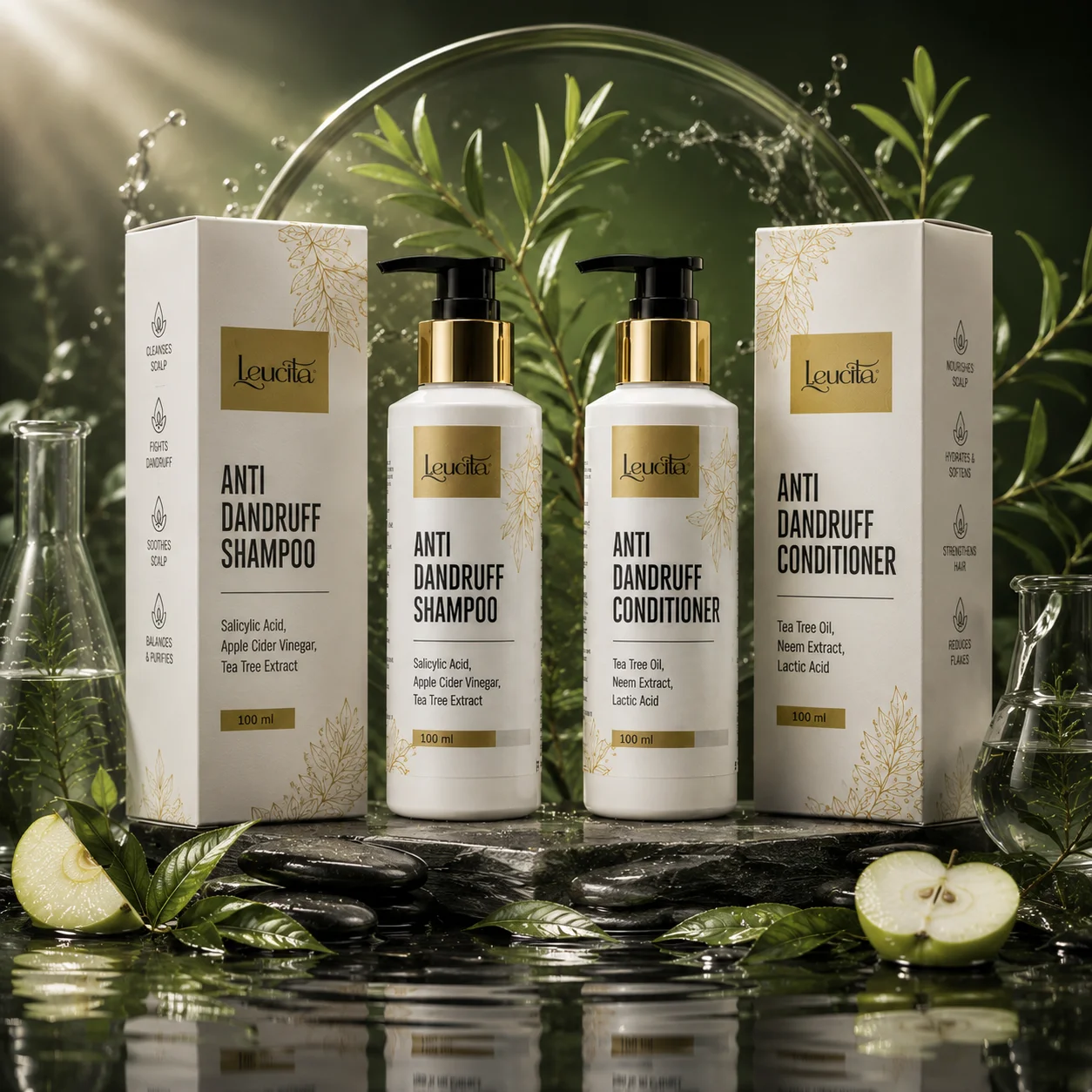
Start with Anti-Dandruff Shampoo to remove the Malassezia trigger and reduce scalp inflammation. Once flaking is under control, Hair Growth Serum can help calm irritated follicles and support a healthier growth cycle. This combination treats the cause and the symptom, which is why it is our recommended routine for anyone dealing with both dandruff and increased shedding.
What are the honest limitations of treating dandruff-related hair fall?
Treating dandruff can reduce inflammation-related shedding, but it will not reverse genetic hair loss. If your hair fall is caused by male or female pattern baldness, anti-dandruff care alone will not be enough. Hormonal hair loss requires different actives and often medical guidance. Also, results take time. Most people need four to eight weeks of consistent use before they see a meaningful drop in flaking and shedding.
Another limitation is that not all flaking is dandruff. Dry scalp, psoriasis, eczema, and product allergies can mimic dandruff but need different treatments. If you have severe redness, pain, or patchy hair loss, see a dermatologist. Self-treatment is for mild to moderate cases, not for active infections or scarring conditions.
Frequently asked questions
Ready to transform your hair?
Take the 2-minute scalp quiz
Related Articles
Dandruff vs. Dry Scalp: How to Actually Tell the Difference
Flaky scalp isn't always dandruff. Here's how to tell dandruff and dry scalp apart, and treat the right one.
Salicylic Acid for Dandruff: The Mechanism
Salicylic acid clears dead-cell buildup at the root of dandruff. Here's exactly how.
Zinc Pyrithione: Why It's in Almost Every Real Anti-Dandruff Formula
The most studied anti-dandruff active there is. Here's what zinc pyrithione actually does.
Piroctone Olamine vs. Zinc Pyrithione
Two of the most common anti-dandruff actives, and how they actually differ.